

History of the project

Tracing the origins of a visionary observatory

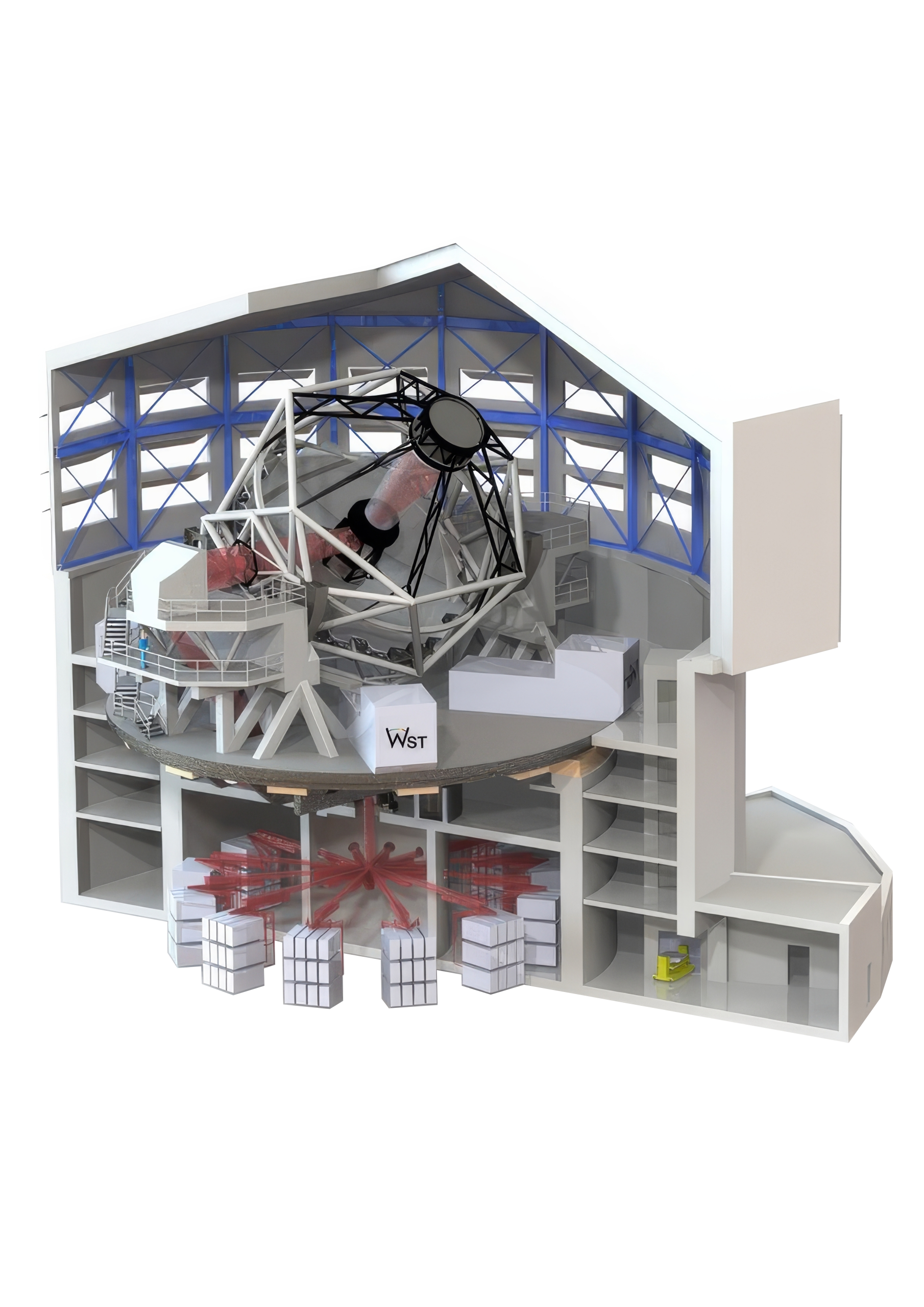
The WST was conceived to transform our understanding of the Universe through large-scale spectroscopy.

Rooted in a European–Australian partnership and supported by Horizon Europe, the WST builds on years of preliminary design studies and international collaboration to create the next-generation facility that will expand the frontiers of astrophysical discovery.

The idea

Origins and Scientific Motivation

  1. The Astronet Science Reference, 2023, Astronet website, URL  (accessed 03/04/2026).
  2. Mérand, A. et al. 2020, Report on the Scientific Prioritisation Community Poll (2020), The Messenger, vol. 184, 14. URL.
  3. US Decadal Survey, 2023, Pathways to Discovery in Astronomy and Astrophysics for the 2020s, National Academies of Sciences, Engineering, and Medicine website, URL (accessed 03/04/2026).
  4. Australia in the era of global astronomy: the decadal plan for Australian astronomy 2016–2025, 2015, Australia Academy of Science website, URL (accessed 03/04/2026).
  5. Discovery at the Cosmic Frontier: Canadian Astronomy Long Range Plan 2020-2030”, 2021, Casca website, URL (accessed 03/04/2026).

The idea of a fully dedicated spectroscopic telescope took shape in the mid-2010s, when astronomers worldwide recognised the growing need for a large-aperture facility optimised for wide-field spectroscopy.
With the advent of powerful observatories such as the Vera Rubin Observatory, the Square Kilometre Array (SKA), and the Cherenkov Telescope Array (CTA), together with space missions including James Webb, Gaia, Euclid and the planned Nancy Grace Roman, and NewAthena, it became clear that astronomy was entering a new era of data abundance.
The unprecedented number of galaxies and stars that are expected to be observed by these facilities — for example, up to 20 billion galaxies and 17 billion stars down to R~27.5 from the Vera Rubin Observatory alone — make it essential to complement imaging with spectroscopic follow-up. Only a dedicated facility could collect the vast number of spectra required to understand the nature, composition, and evolution of these sources.
Across continents, this need was echoed in strategic documents such as the Astronet Science Vision and Infrastructure Roadmap 2022-2035, the US Decadal Survey 2020, and the Australian and Canadian Decadal Plans for Astronomy (2016–2030). Within Europe, a 2021 ESO community poll confirmed that 75% of respondents viewed a wide-field spectroscopic telescope as the most crucial facility for the coming decades.

Spectel

From concept to collaboration

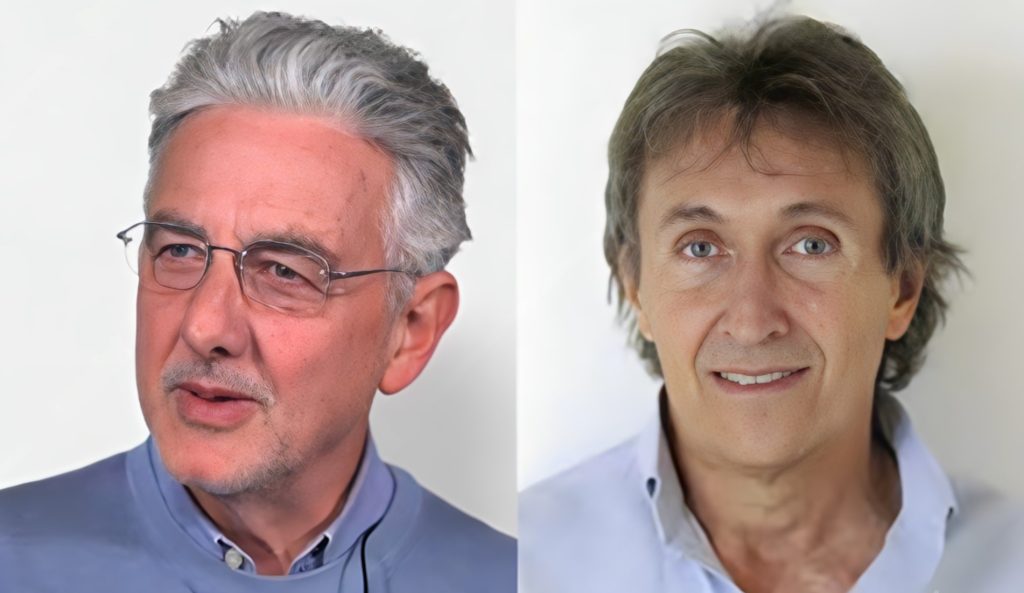
Between 2016 and 2020, the idea was first explored under the name SpecTel, a design study conducted at ESO.

Led by Luca Pasquini and Bernard Delabre, the study proposed two innovative concepts for a 10-metre-class wide-field spectroscopic telescope:

  • a five-mirror design optimised for gravity-invariant instruments, and
  • a wide-field Cassegrain telescope designed for fibre-fed spectrographs.

At the same time, ESO established a Working Group chaired by Richard Ellis, which developed the first comprehensive scientific case for a large-aperture spectroscopic survey telescope.

The group’s report highlighted two key requirements: the largest possible field of view and the use of optical fibres feeding intermediate- and high-resolution spectrographs.
In 2018, Pasquini et al. presented an updated design that also considered a large Integral Field Unit (IFU) at a separate focal station, enhancing the telescope’s versatility and scientific reach.

  • Hall et al., 2016. Ground-based and Airborne Telescopes VI. Proceedings of the SPIE, Volume 9906 (2016), DOI: 10.1117/12.2254876
  1. Pasquini L. et al., 2016. New telescope designs suitable for massively multiplexed spectroscopy, Proceedings of the SPIE, Volume 9906, id 99063C, DOI: 10.1117/12.2232289
  2. Ellis, R. et al. 2017. The Future of Multi-Object Spectroscopy, a ESO Working Group report, eprint arXiv:1701.01976, DOI:https://doi.org/10.48550/arXiv.1701.01976
  3. Pasquini L. et al. 2018. A concept for a new spectroscopic facility, Proceedings of the SPIE, Volume 10700, id. 107004E, DOI: 10.1117/12.2313076

Exploring a new design

The birth of the wide-field spectroscopic telescope

In 2021, building on these foundations, a European–Australian consortium led by Roland Bacon was formed to advance the concept and explore a new design — the Wide-field Spectroscopic Telescope (WST).

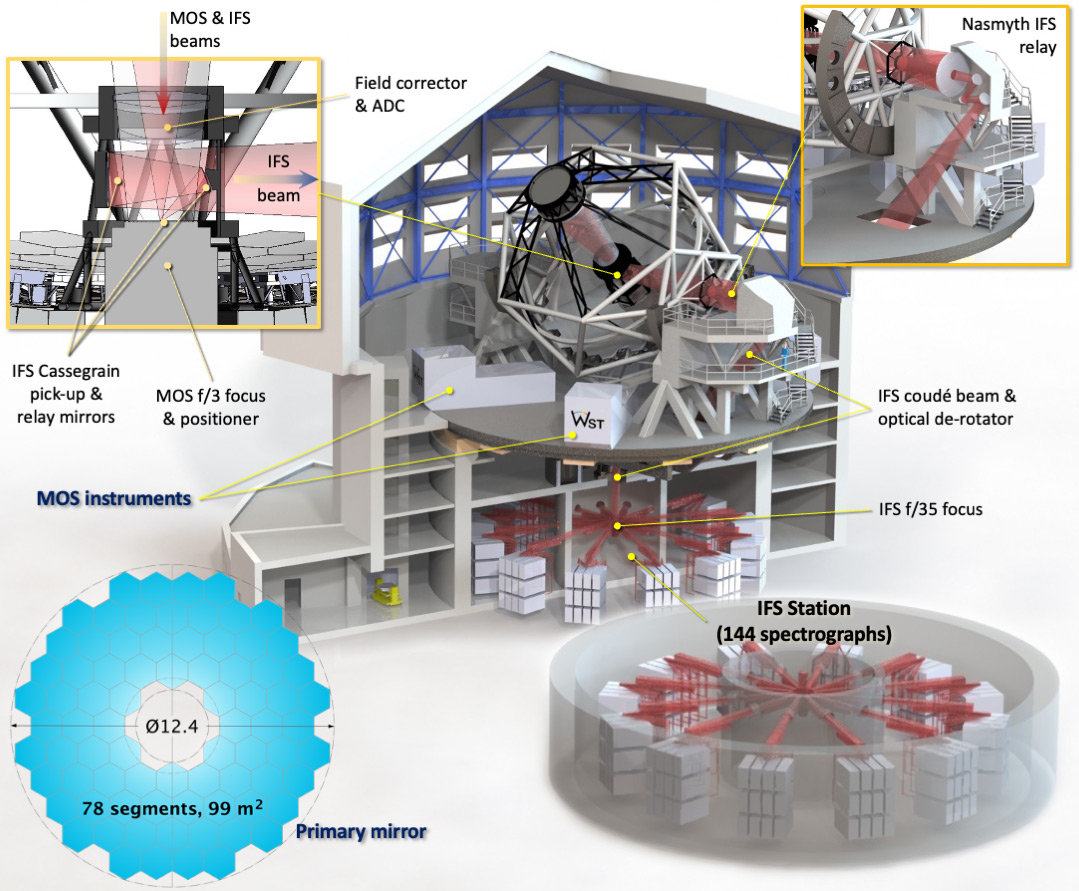
The WST inherited the SpecTel vision and introduced a major innovation: the parallel operation of two powerful instruments —

  • a multi-object spectrograph (MOS) offering both low- and high-resolution modes, and
  • a giant panoramic Integral Field Spectrograph (IFS).

This dual capability combines statistical power with detailed spatial information, maximising the scientific return and enabling the telescope to conduct transformational surveys of galaxies, stars, and transients.

Foundations

The conceptual design phase

Between 2021 and 2024 the Consortium carried out a preliminary design study. At the same time, the Science Team, led by the Project Scientist Vincenzo Mainieri, was formed and developed the initial science drivers, which were published in a first version of the WST White Paper.

The WST project was funded by the European Commission under the Horizon Europe infrastructure programme in mid-2024 and entered its detailed Conceptual Design Phase (CDP) in 2024.

During this phase, the consortium is further developing and strengthening the scientific case, technical architecture, and operational model for the facility, ensuring that it meets the highest standards of scientific excellence, sustainability, and inclusivity.

The CDP represents the basis for the WST’s candidacy as ESO’s post-ELT facility, defining the long-term path toward its construction in Chile, one of the world’s most productive astronomical regions.

  1. Mainieri V. et al. 2024. The Wide-field Spectroscopic Telescope (WST) Science White Paper, eprint arXiv2403.05398, DOI: https://arxiv.org/abs/2403.05398
  2. Pasquini L. et al. 2018. A concept for a new spectroscopic facility, Proceedings of the SPIE, Volume 10700, id. 107004E, DOI: 10.1117/12.2313076

PERSPECTIVE

A shared vision for the future

The WST is more than an astronomical facility — it is a collaborative vision for the future of astrophysics. By bringing together scientists, engineers, and institutions from across Europe, Australia, and beyond, the project reflects a collective commitment to open science, technological innovation, and responsible research infrastructure.
Through this partnership, the WST will complement major facilities such as ESO’s Extremely Large Telescope, Vera Rubin Observatory, Euclid, Gaia, and the Square Kilometre Array, the Einstein Telescope, unlocking the full scientific potential of the 2040s and beyond.

Milestones

More than a decade of collaboration, gazing toward the Universe

2016
SpecTel Study at ESO

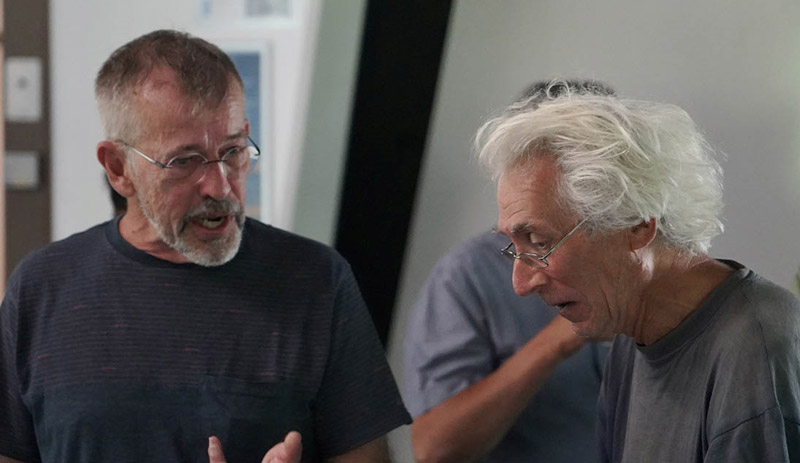
Initiated by Luca Pasquini & Bernard Delabre; two 10m-class telescope concepts proposed.

2017
ESO Working Group Report

Chaired by Richard Ellis; defined key scientific and technical requirements.

2018
Expanded Design Concept

Inclusion of a large Integral Field Unit (IFU) option (Pasquini et al. 2018).

2021

WST Consortium Established

European–Australian collaboration led by Roland Bacon; dual MOS + IFS concept introduced.

2022-2024
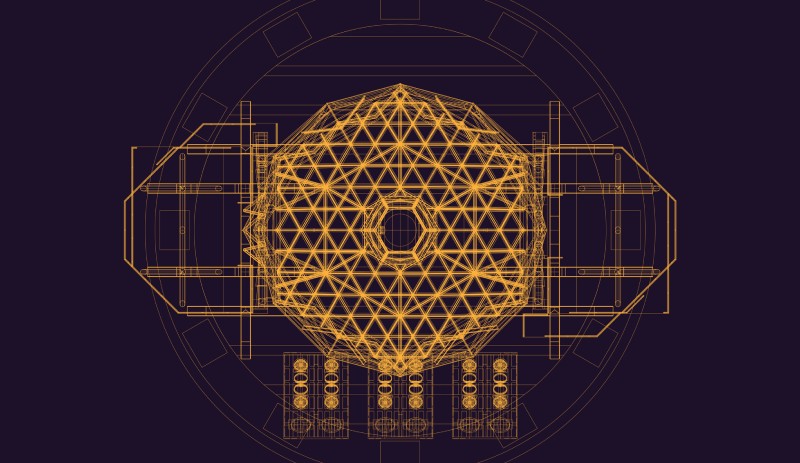
Interim Study

 Development of design, science case, and governance.

2024
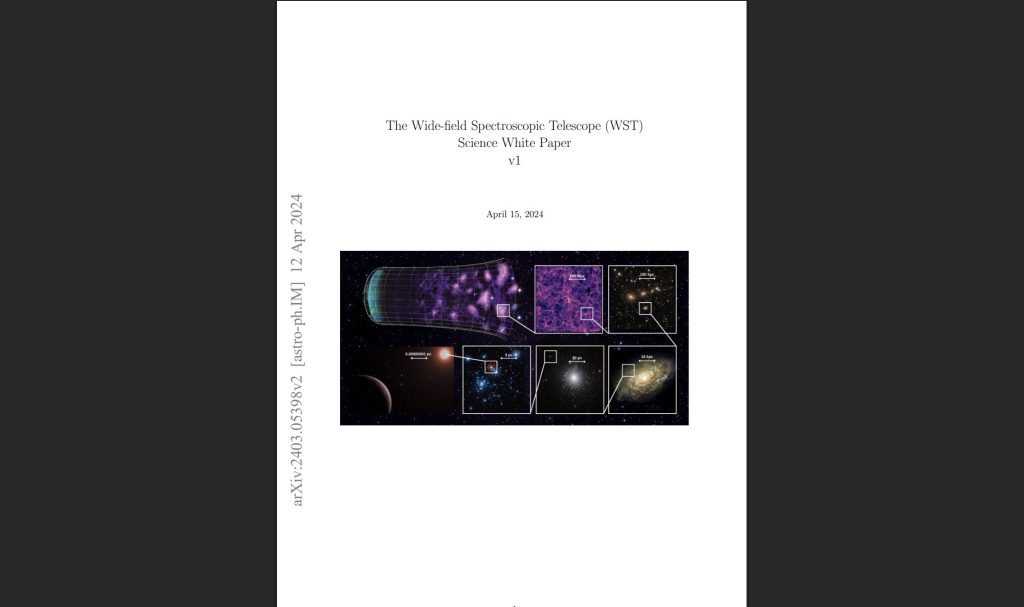
White paper published

Science drivers developed and published. Synergies with other facilities highlighted.

2025
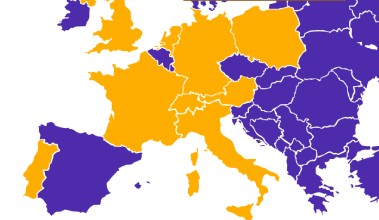
Start of Horizon Project

All the expertise required to perform the concept study of a facility as ambitious as the WST.

Next section

The three-year WST concept study

The project follows two concurrent timelines, each with its own milestones and deliverables.

Acronyms

TECHNICAL

WST: Wide-field Spectroscopic Telescope

FoV: Field-of-View

IFS: Integral Field Spectrograph

IFU: Integral Field Unit

MOS: Multi-Object Spectrograph

MOS-HR: High-resolution Multi-Object Spectrograph

MOS-LR: Low-resolution Multi-Object Spectrograph

ToO: Targets of Opportunity

INSTITUTES & UNIVERSITIES

AIP: Leibniz Institute for Astrophysics Potsdam

ANU/Astralis: The Australian National University / Astralis

CRAL/CNRS: Centre de Recherche Astrophysique de Lyon / French National Centre for Scientific Research

EPFL: Swiss Federal Institute of Technology in Lausanne

ESO: European Southern Observatory

IA/CAUP: Institute of Astrophysics and Space Sciences / Centre for Astrophysics of the University of Porto

IASF-MI/INAF: Institute for Space Astrophysics and Cosmic Physics of Milan / National Institute for Astrophysics

IP2I/CNRS: Institute of Physics of the Two Infinities of Lyon / French National Centre for Scientific Research

IRFU/CEA: Institute for Research into the Fundamental Laws of the Universe / French Alternative Energies and Atomic Energy Commission

Lagrange/CNRS: Lagrange Laboratory / French National Centre for Scientific Research

LAM/CNRS: Marseille Astrophysics Laboratory / French National Centre for Scientific Research

MAQC/Astralis: Macquarie University / Astralis

NCAC: Nicolaus Copernicus Astronomical Center

OAArcetri/INAF: Arcetri Astrophysical Observatory / National Institute for Astrophysics

OABrera/INAF:Brera Astronomical Observatory / National Institute for Astrophysics

OACapodimonte/INAF: Capodimonte Astronomical Observatory / National Institute for Astrophysics

OASBologna/INAF:Bologna Observatory of Astrophysics and Space Science / National Institute for Astrophysics

UKRI: UK Research and Innovation

UNIBO: University of Bologna

UNIGRO/NOVA: University of Groningen / The Netherlands Research School for Astronomy

UNISYD: The University of Sydney

UNIVIE: University of Vienna

UWA: The University of Western Australia

Edit Template

Join the community

ue-logo-h
This project has received funding from the European Union Horizon Europe Research and Innovation Action under grant agreement no. 101183153 -WST.
Views and opinions expressed are however those of the author(s) only and do not necessarily reflect those of the European Union or European Research Executive Agency (REA). Neither the European Union nor the granting authority can be held responsible for them.

Acronyms

TECHNICAL

WST: Wide-field Spectroscopic Telescope

FoV: Field-of-View

IFS: Integral Field Spectrograph

IFU: Integral Field Unit

MOS: Multi-Object Spectrograph

MOS-HR: High-resolution Multi-Object Spectrograph

MOS-LR: Low-resolution Multi-Object Spectrograph

ToO: Targets of Opportunity

INSTITUTES & UNIVERSITIES

AIP: Leibniz Institute for Astrophysics Potsdam

ANU/Astralis: The Australian National University / Astralis

CRAL/CNRS: Centre de Recherche Astrophysique de Lyon / French National Centre for Scientific Research

EPFL: Swiss Federal Institute of Technology in Lausanne

ESO: European Southern Observatory

IA/CAUP: Institute of Astrophysics and Space Sciences / Centre for Astrophysics of the University of Porto

IASF-MI/INAF: Institute for Space Astrophysics and Cosmic Physics of Milan / National Institute for Astrophysics

IP2I/CNRS: Institute of Physics of the Two Infinities of Lyon / French National Centre for Scientific Research

IRFU/CEA: Institute for Research into the Fundamental Laws of the Universe / French Alternative Energies and Atomic Energy Commission

Lagrange/CNRS: Lagrange Laboratory / French National Centre for Scientific Research

LAM/CNRS: Marseille Astrophysics Laboratory / French National Centre for Scientific Research

MAQC/Astralis: Macquarie University / Astralis

NCAC: Nicolaus Copernicus Astronomical Center

OAArcetri/INAF: Arcetri Astrophysical Observatory / National Institute for Astrophysics

OABrera/INAF:Brera Astronomical Observatory / National Institute for Astrophysics

OACapodimonte/INAF: Capodimonte Astronomical Observatory / National Institute for Astrophysics

OASBologna/INAF:Bologna Observatory of Astrophysics and Space Science / National Institute for Astrophysics

UKRI: UK Research and Innovation

UNIBO: University of Bologna

UNIGRO/NOVA: University of Groningen / The Netherlands Research School for Astronomy

UNISYD: The University of Sydney

UNIVIE: University of Vienna

UWA: The University of Western Australia

Edit Template
ue-logo-h
This project has received funding from the European Union Horizon Europe Research and Innovation Action under grant agreement no. 101183153 -WST.
Views and opinions expressed are however those of the author(s) only and do not necessarily reflect those of the European Union or European Research Executive Agency (REA). Neither the European Union nor the granting authority can be held responsible for them.