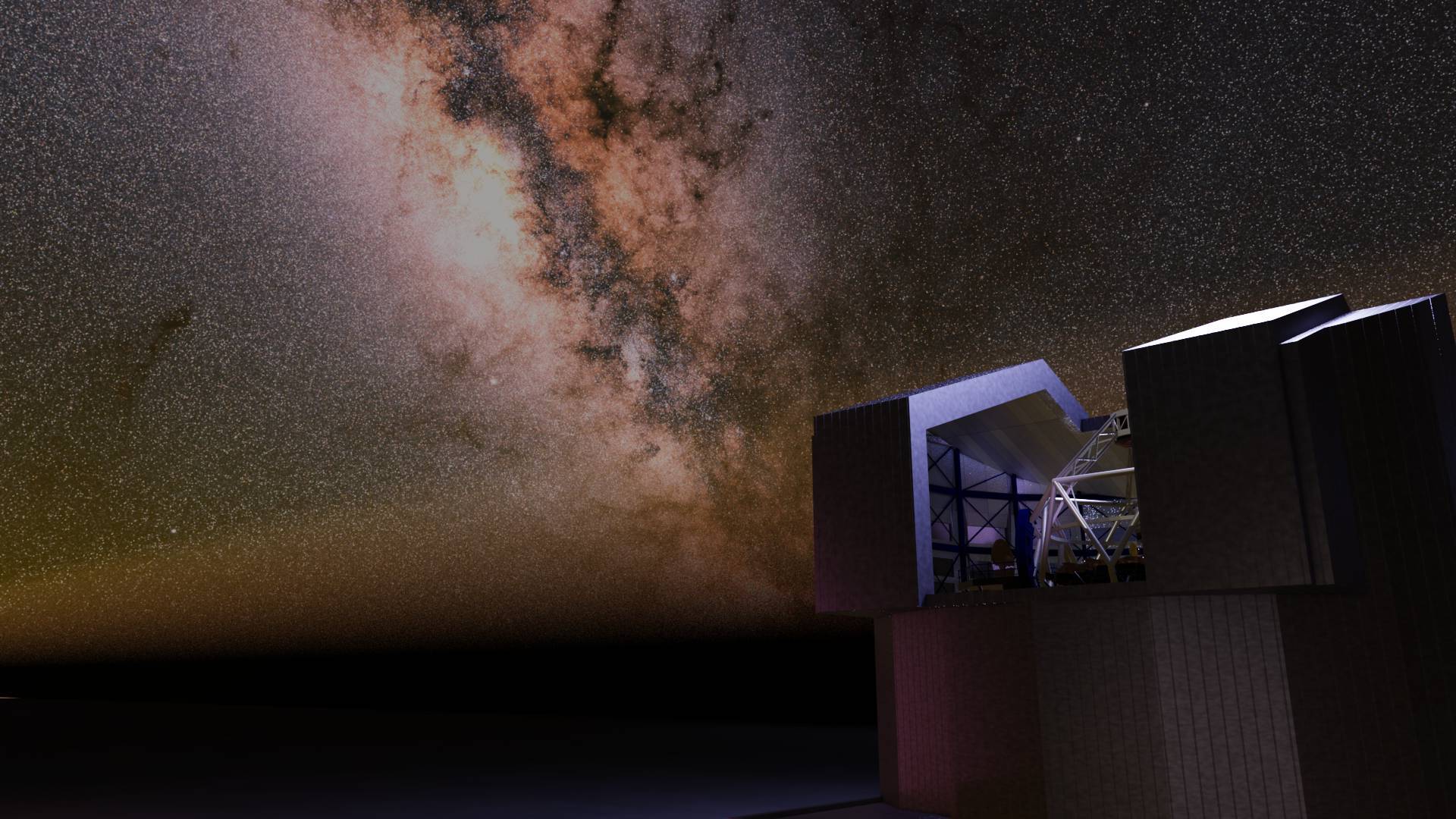
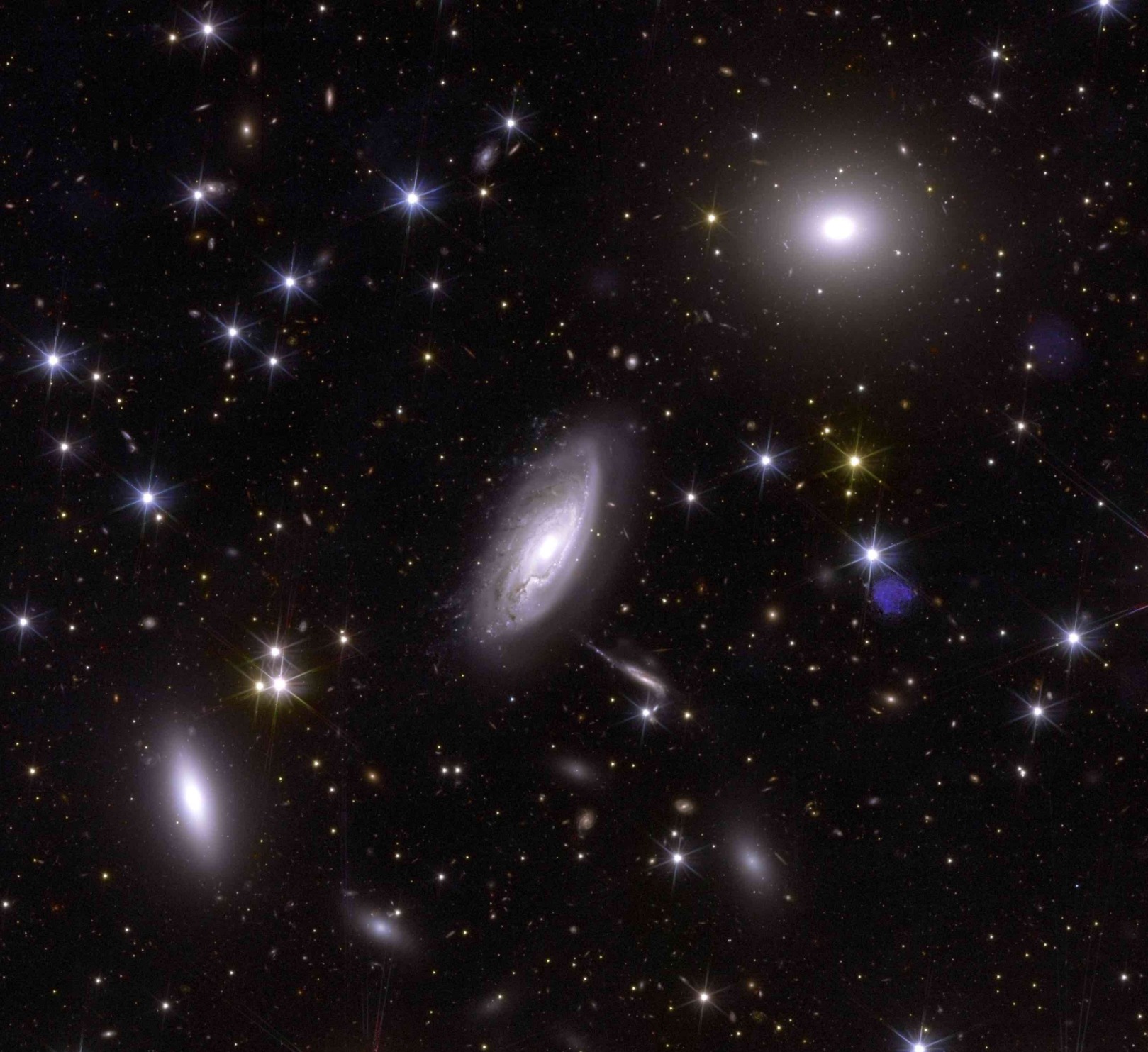
The WST is the concept study for a next-generation facility, entirely dedicated to spectroscopic surveys.
Combining a large field of view (FoV), a high-multiplex and a giant integral field spectrograph (MOS and IFS), it will map hundreds of millions of galaxies and stars, and collect billions of spectra, revealing the Universe in unprecedented detail.
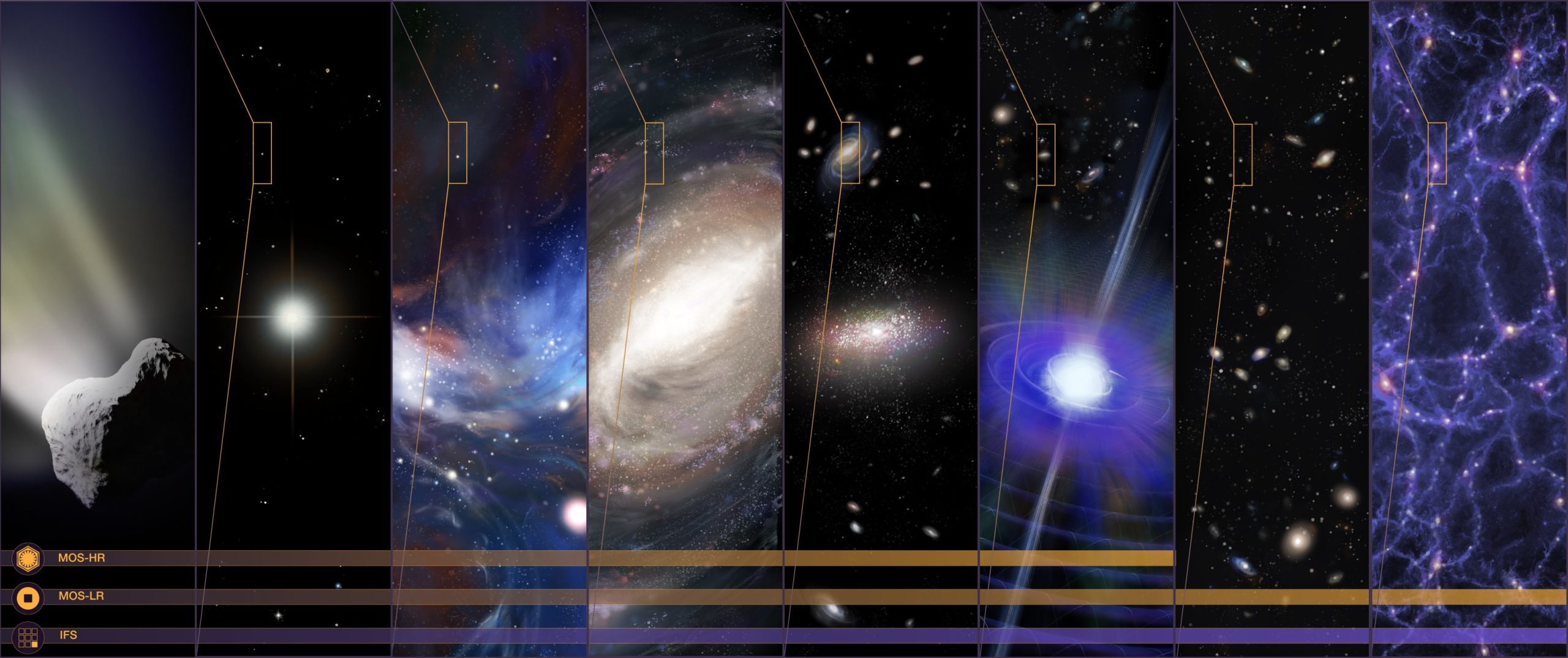
The WST is designed as a 12-m telescope with the parallel operation of a low-resolution multi-object spectrograph (MOS-LR), a high-resolution multi-object spectrograph (MOS-HR) and a panoramic integral-field spectrograph (IFS).
By combining all these instruments at once, The WST will be able to simultaneously provide a massive number of low-resolutionspectra of stars and galaxies (MOS-LR), millions of spectra at high-resolution of stars in the Milky Way and Local Group galaxies (MOS-HR), and integral field spectroscopy of different environments and untargeted sources via the IFS. Moreover, its survey design is conceived to manage and follow alerts from photometric transients, to monitor variable sources, and to release spectroscopic alerts itself, opening a new frontier in time-domain spectroscopy.
Such a complementary approach will open up an exceptionally broad range of scientific opportunities. It is more likely that a science case will benefit from WST than not.

over 14,000 sq. deg.
MOS-LR

over most of the Galaxy
and the Local Group
MOS-LR
over most of the Galaxy
and Local group
MOS-HR
over 30 sq. deg. in diverse environments
IFS
300 million galaxies (to AB 24.5) over 14,000 deg2

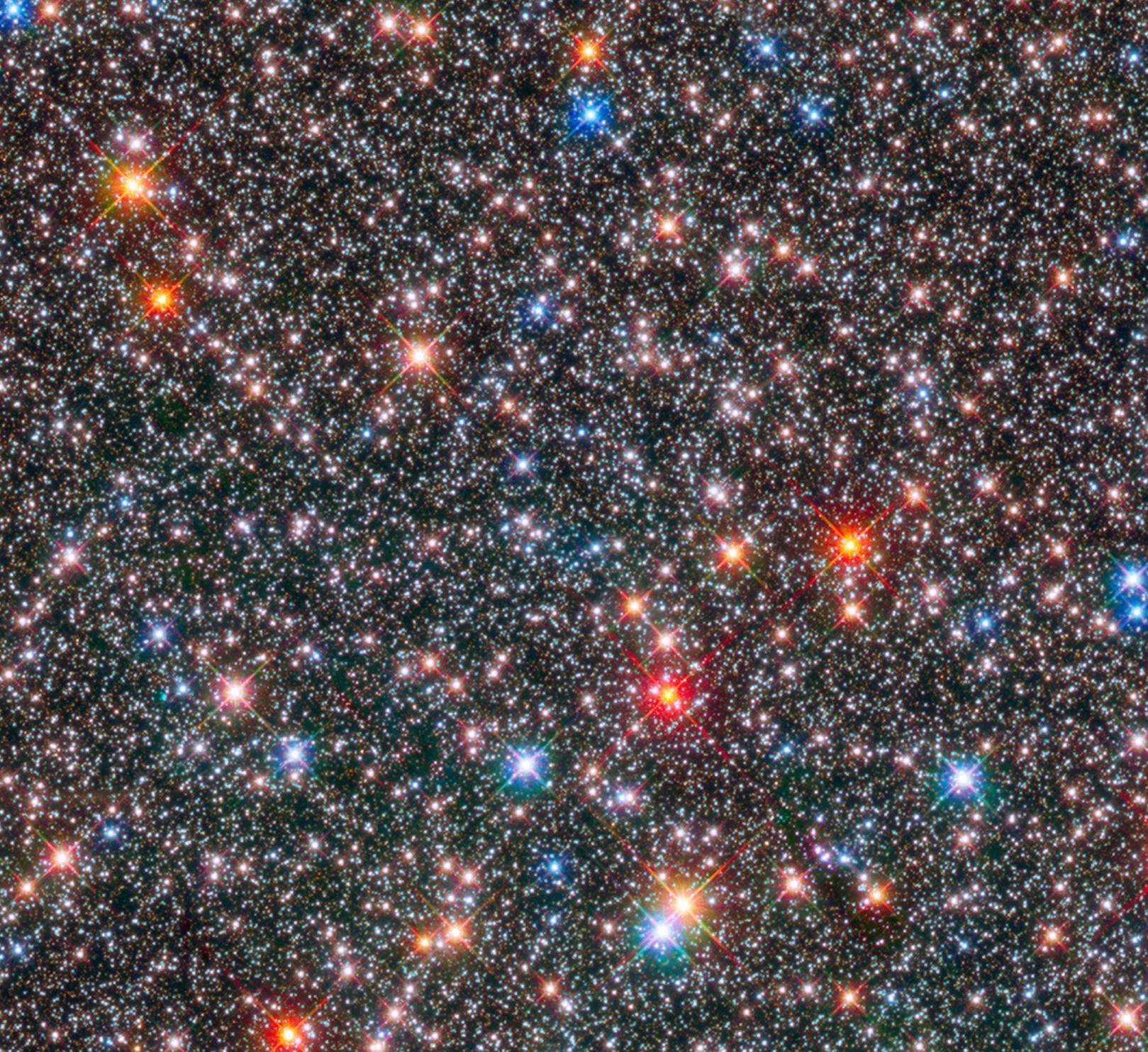
25 million stars (to AB 23.0) over most of the Galaxy and the Local Group

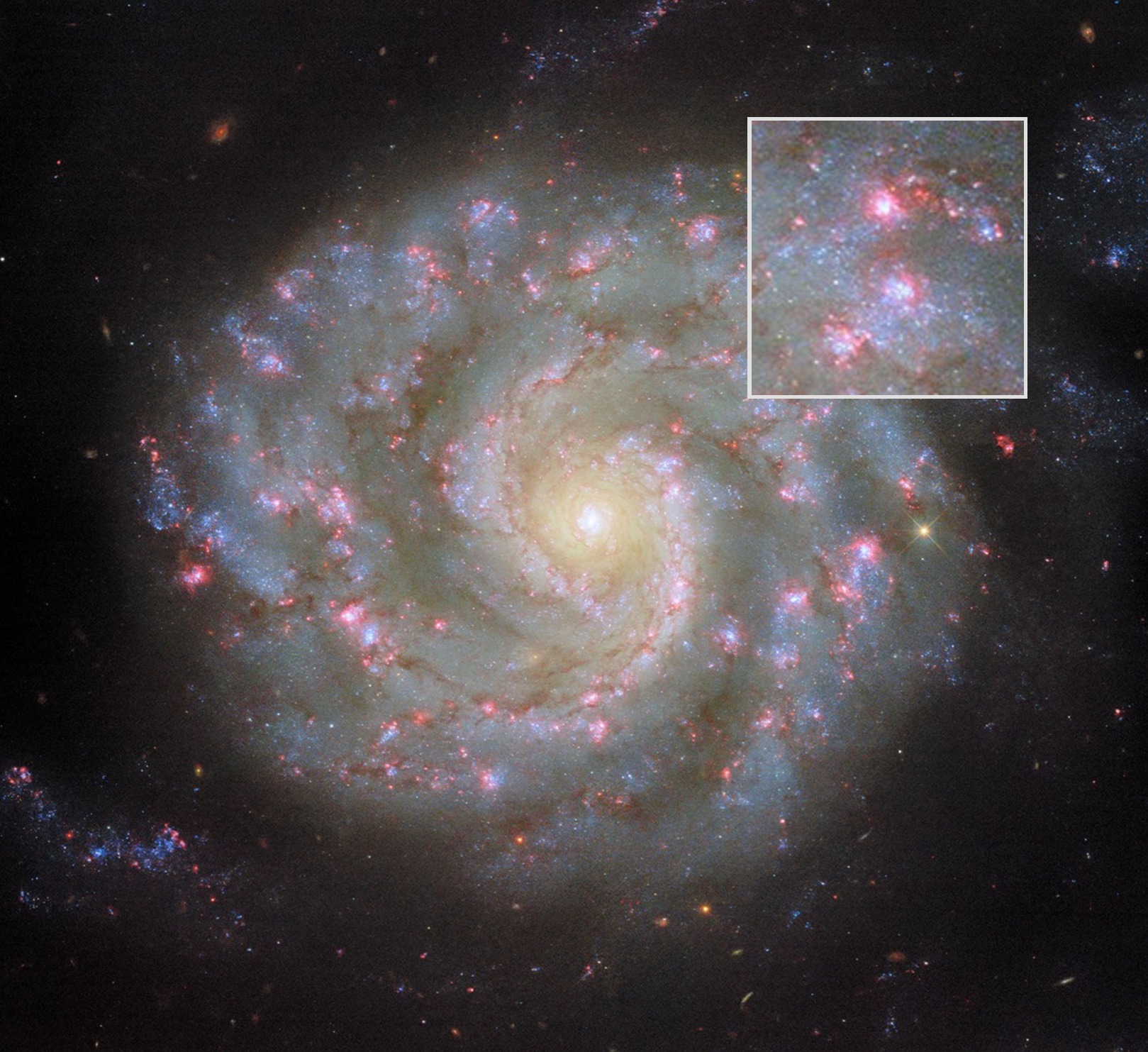
4 billion spectra, over 30 deg2 in diverse environments (low-density fields, galaxy and star clusters, galactic fields, ...)
Conceived as a multi-purpose facility, the WST will deliver transformative results across nearly all areas of astrophysics — from the large-scale structure of the Universe to the minor bodies in the Solar System.
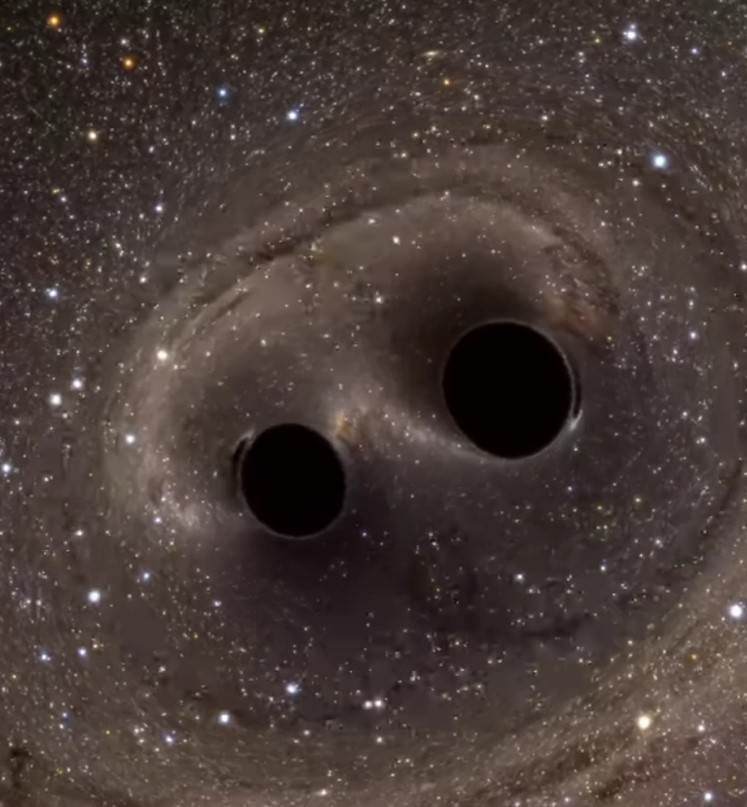
Key research themes include: the formation of the first stars and galaxies and their role in cosmic reionisation; the distribution of dark and baryonic matter in the cosmic web; the expansion history of the Universe; the baryon cycle in galaxies and the origins of elements; the assembly history of the Milky Way and its satellites; the origins of stars and planets; and the study of transient phenomena, including the electromagnetic counterparts of gravitational-wave events.
Conceived as a multi-purpose facility, the WST will deliver transformative results across nearly all areas of astrophysics — from the large-scale structure of the Universe to the minor bodies in the Solar System.
Key research themes include: the formation of the first stars and galaxies and their role in cosmic reionisation; the distribution of dark and baryonic matter in the cosmic web; the expansion history of the Universe; the baryon cycle in galaxies and the origins of the elements; the assembly history of the Milky Way and its satellites; the origins of stars and planets; and the study of transient phenomena, including the electromagnetic counterparts of gravitational wave events.
With the advent of large optical, radio, and astrometric survey facilities, astronomy has entered the era of data-driven discovery.
To fully exploit this wealth of multi-wavelength information, spectroscopy is essential, as it can add further dimensions: the chemical profile, dynamical and positional information, and a characterisation of the environment, transforming these data into a coherent picture of the Universe.
In this regard, thanks to its unique capabilities, the WST will be an unparalleled complementary facility for Euclid, the Nancy Grace Roman Space Telescope, Gaia, LSST/Vera Rubin Observatory, SKAO, Einstein Telescope (ET), and the Cherenkov Telescope Array (CTA).
The WST will also be a feeder facility for ESO’s Extremely Large Telescope (ELT), by discovering and pre-selecting targets that can then be observed in greater detail by the ELT.
Besides the planned scientific applications and goals, experience with all major facilities has shown that many transformative discoveries arise from unanticipated uses. For the WST, the greatest potential for such discoveries stems from the two main features of its instruments: the high statistical power of the MOS and the blind observing capability of the IFS.
The MOS has the potential to unveil the rare Universe: the combination of large samples and homogeneous data will make it possible to identify rare phenomena and outliers that would otherwise remain undetected.
The IFS, instead, offers a unique opportunity for serendipitous discoveries: indeed, it does not require a preselection, but collects spectra for all sources within its FoV — compact or diffuse, selected or not. Even when the observations are driven by the MOS, the instrument will always be operating, simply observing random fields located at the center of the MOS field.
Time-domain and multi-messenger astronomy are key priorities
Coordinator message
Issue #1 The WST Chronicle