


SCIENCE
The WST will be pivotal, in synergy with other major astronomical facilities in the 2040s, to tackle some of the key open questions in modern astrophysics.
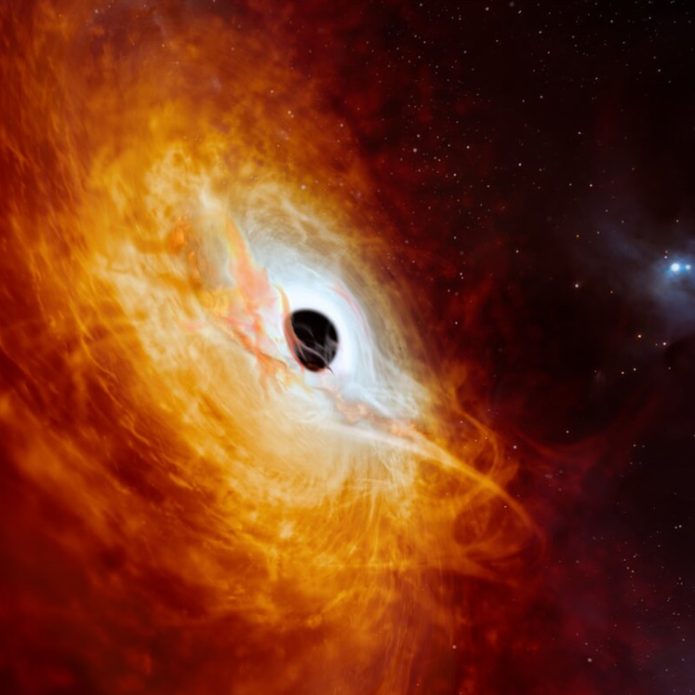
Black holes
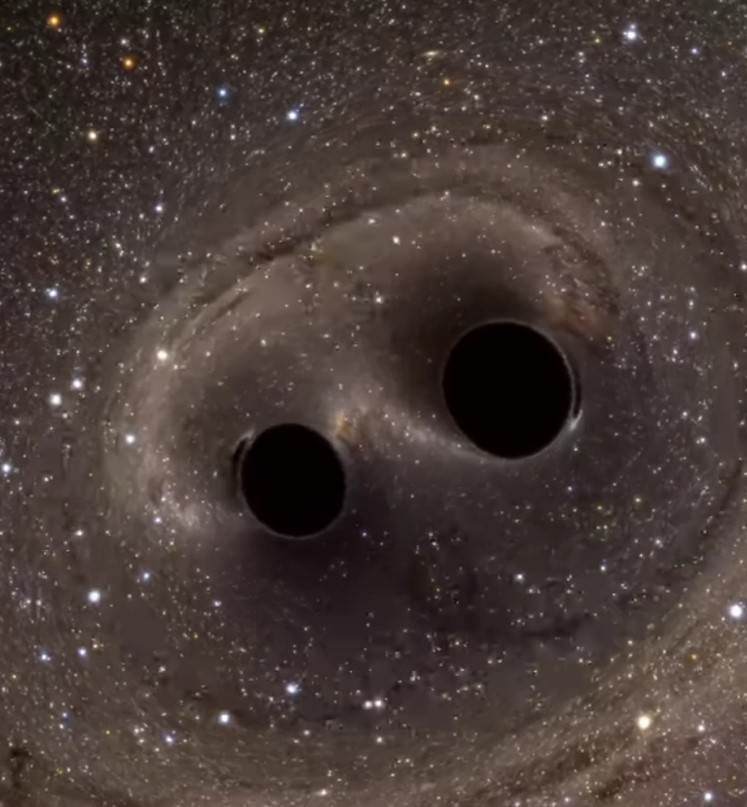
Black Holes growth across time and mass
How do supermassive black holes form, and what is the black hole mass function? The statistical power of the WST will be key in investigating intermediate mass black holes and constrain the whole range of black hole population and their influence on galaxies.
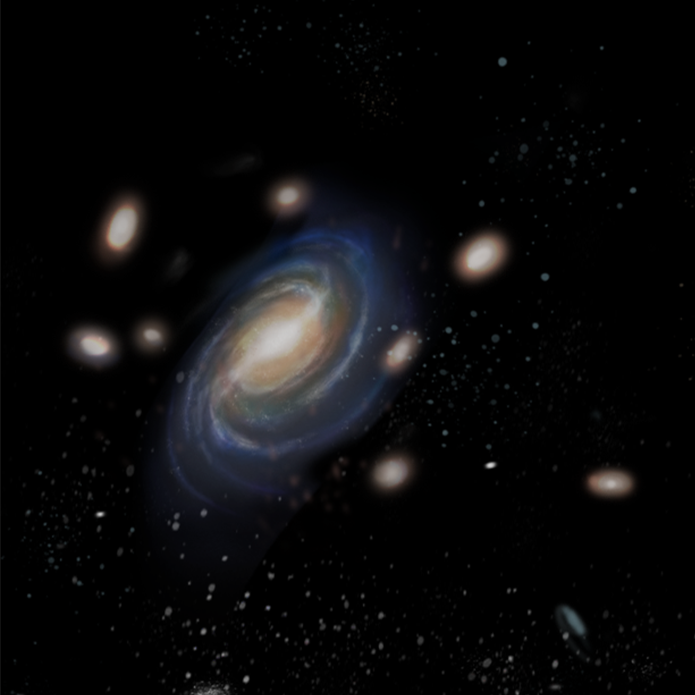
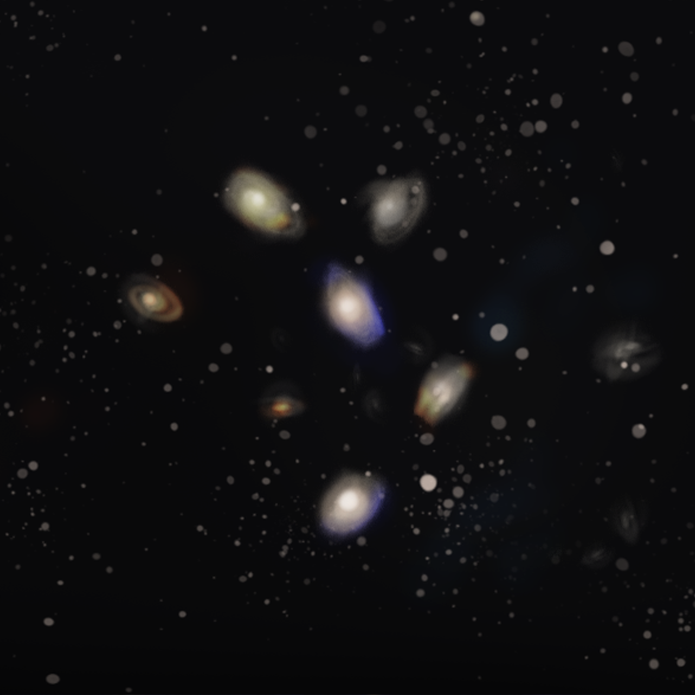
Galaxy assembly
Galaxy evolution across all physical scales
An immense range of physical scales, from star formation in parsec-sized molecular clouds to kiloparsec-scale secular evolution and galactic flows, to megaparsec-scale cosmic environments.
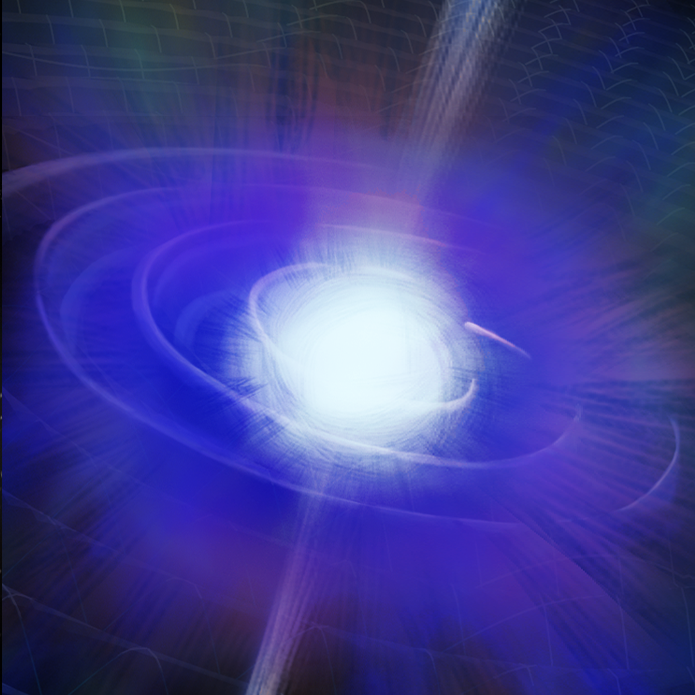
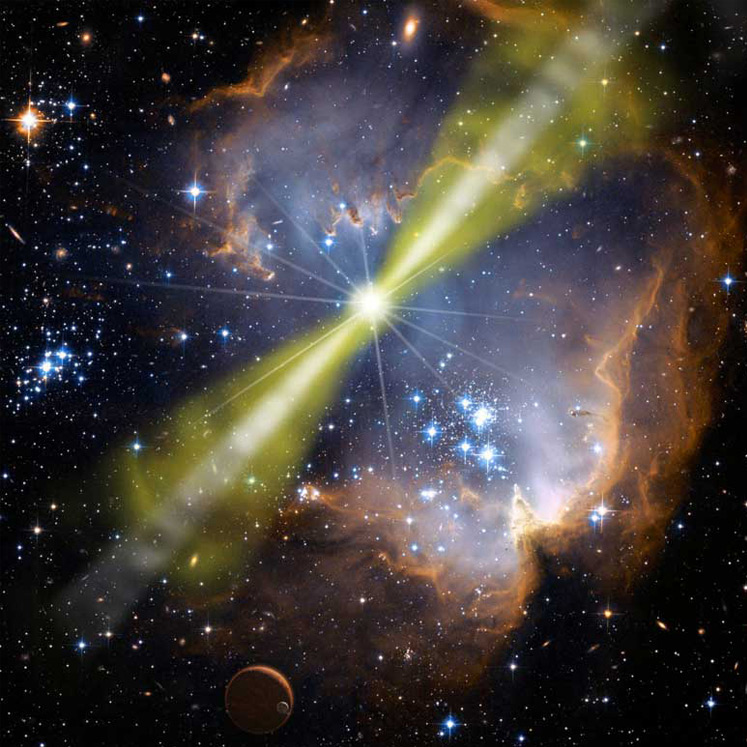
Multi-messenger astrophysics
Where gravity, light, and particles meet
Multi-messenger astronomy has been identified as a priority in most major astrophysics planning exercises and will be mainstream in the WST era.
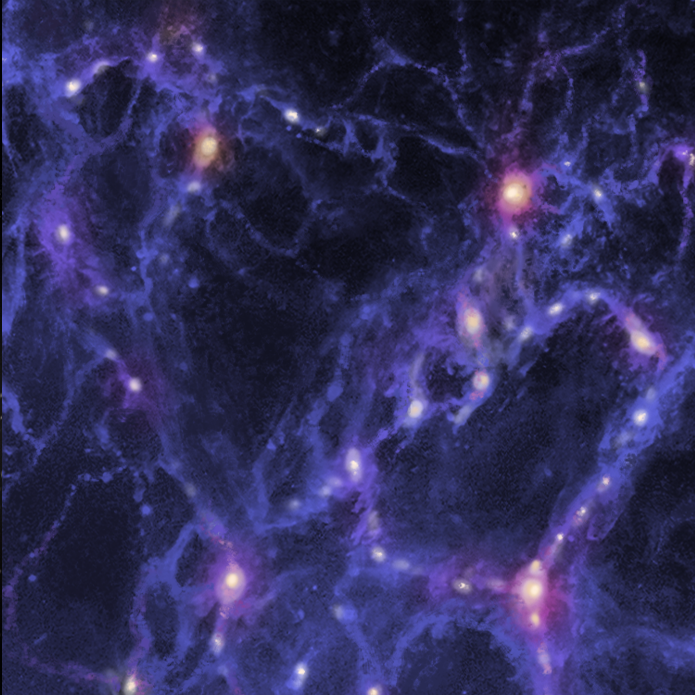
New frontiers in cosmology
The nature of the dark sector and gravity
Understanding how dark matter, dark energy, and gravity shape structure across the Universe requires measurements that span from the smallest galaxies to the largest cosmic environments.
Origins
the Physics of the Early Universe, first stars and first galaxies
One key phase in the early Universe is the so-called Cosmic reionisation, the period when the gas in intergalactic space transitioned from a neutral to fully ionised state.
Star and planet formation
Tracing their formation in different environments
Understanding how stars and plants form is fundamental to addressing several open questions of modern astrophysics, yet we do not have a full comprehension of the process. This impacts multiple fields, from the evolution of galaxies to the origin of our Solar System.
Stars
Stars, their end-points, feedback, and elements production
Understanding how stars live, die, shape their surroundings, and enrich the interstellar medium lies at the heart of almost every major question in astrophysics.
The dynamic Universe
Exploring the ever-changing Universe
Many objects in the Universe are moving, flaring, and transforming — and every change tells a story. Time-variable phenomena can occur on any physical scale, from the Solar System to distant galaxies, and on very different timescales, mainly between hours and years.
Synergies
From multi-wavelength surveys to a unified picture of the Universe
Understanding how dark matter, dark energy, and gravity shape structure across the Universe requires measurements that span from the smallest galaxies to the largest cosmic environments.
Dedicated for science addicted and media pros
Learn how WST project will push the boundaries of spectroscopic surveys.
Explore
Discover the vision behind the WST: a next-generation [...]
Consortium
The WST consortium brings together the Horizon [...]
We use cookies that are essential for accessing our websites and using our services. We also use cookies to analyse, measure and improve our websites’ performance, to enable content sharing via social media and to display media content hosted on third-party platforms.
You can manage your cookie preferences and find out more by visiting 'Cookie Settings and Policy'.
Addressing outstanding science
Issue #1 The WST Chronicle